
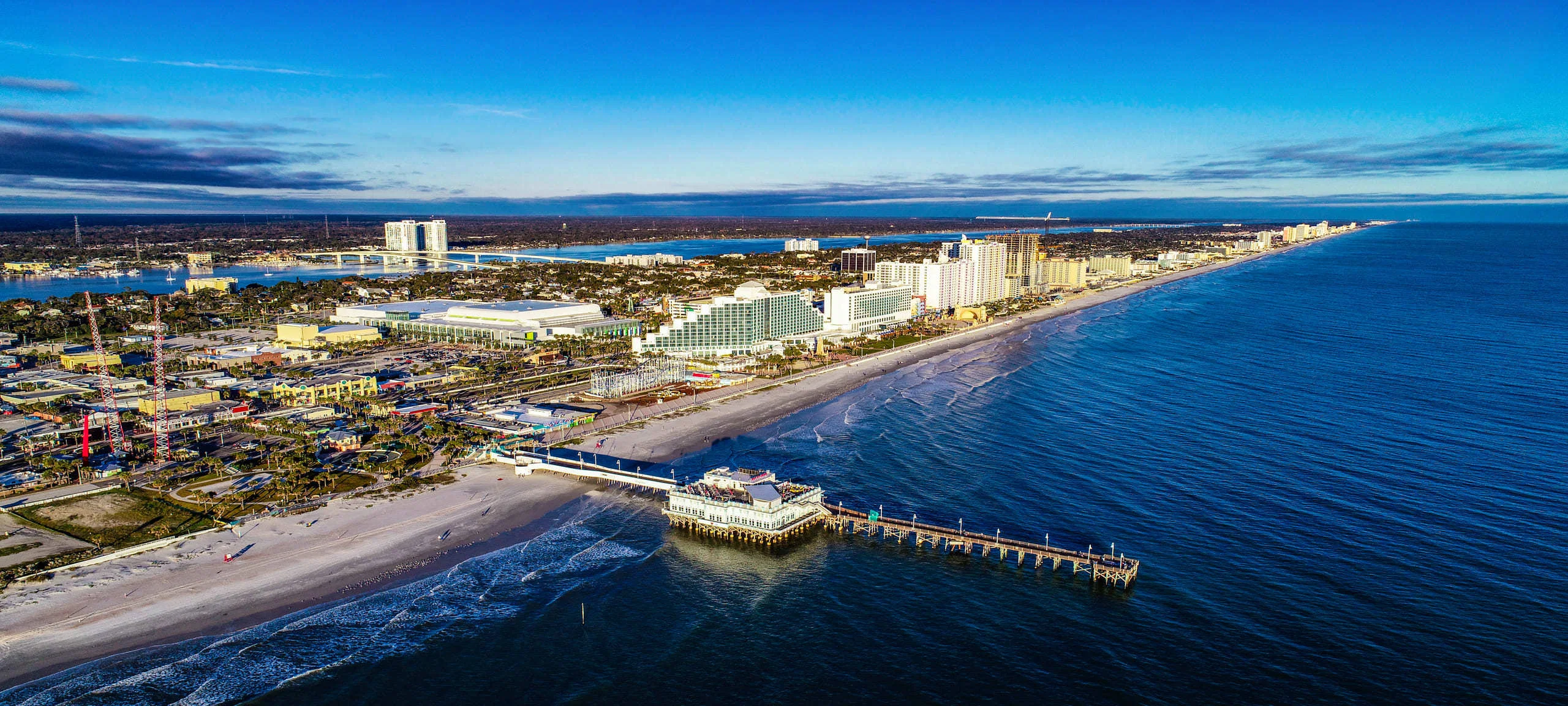
Ormond Beach is a mainland-and-oceanfront city just north of Daytona Beach proper, best known locally for its early motorsport history and its quieter, more residential character than the beachside strip further south. Trade show and exhibit work based here usually means staging out of a nearby hotel or the museum grounds while the main show floor sits in the Daytona core.
The only dedicated event venue actually inside Ormond Beach is Ormond Memorial Art Museum & Gardens, a small gallery-and-garden property suited to receptions, donor events, and intimate meeting programs rather than a full trade show floor. Anything requiring booth rows, drayage docks, or a large hall is produced from Ocean Center, roughly ten to fifteen minutes south along US-1 or A1A depending on traffic and bridge timing.
That split matters for planning. A show physically at the museum grounds needs a lighter production kit centered on AV, signage, and finish carpentry rather than freight handling, while any Ormond Beach-based exhibitor or sponsor showing at Ocean Center still needs its transportation, labor call, and material handling scheduled against the Daytona core, not the museum address.
Where Ormond Beach sits in the Daytona Beach market
Ormond Beach is the northern anchor of the Daytona Beach metro, split between a mainland core along the Halifax River and an oceanfront strip reached by two bridges. It is close enough to the main event district to draw on the same labor pool and vendor network, but far enough that anything with real square footage still moves to Ocean Center.
Local planners tend to use Ormond Beach venues for the smaller pieces of a program, a donor reception, a press preview, a private dinner, and keep the exhibit floor itself downtown. That two-site pattern is normal here and does not add meaningful cost if it is planned for from the start.
That distance also shapes vendor selection, since crews and rental stock based near Ocean Center can reach either site quickly, while anything sourced from further away should account for the extra leg out to the museum grounds.
Ormond Memorial Art Museum & Gardens as an event site
The museum and its gardens offer indoor gallery space plus outdoor lawn and courtyard areas, which makes it a workable location for a reception, a small conference breakout, or a branded activation tied to a larger show happening elsewhere in Daytona Beach. It is not built for freight, so anything arriving needs to come in through standard loading access rather than a dock.
Because the museum is a working cultural institution, install and strike windows are typically tighter than at a purpose-built venue, and any signage, lighting, or structure has to respect the gallery and garden layout. Booking early and confirming the exact footprint before design starts avoids rework.
The gallery setting rewards restrained, well-lit display work over heavy signage, and past events here have leaned on natural light and simple risers rather than a full truss package.
Freight routes from Ormond Beach to Ocean Center
Most freight tied to an Ormond Beach-based program is actually headed to Ocean Center, since that is where the exhibit floor lives. The route south runs along US-1 or A1A, both of which can slow during beach season weekends, so drayage timing should build in a buffer rather than assuming a straight ten-minute run.
Advance shipments to the show's general contractor warehouse are handled the same way as any other Daytona Beach exhibitor, with target dates set against the official show schedule rather than the Ormond Beach venue's hours.
Coastal weather is a real planning variable for the garden portion of the property, so an outdoor component needs a rain contingency built in from the start.
Labor and staffing coordination
Labor for anything at Ocean Center is called through the show's official labor provider and jurisdiction rules, the same as for any Daytona Beach exhibitor. Labor for a smaller Ormond Beach museum event is usually a lighter crew, handled directly rather than through show-floor union scheduling.
Knowing which labor model applies before the show opens avoids double-booking crews or missing a required jurisdictional call at the larger venue.
Vendors familiar with both sites can move equipment between them same-day when a program genuinely spans a reception at the museum and a floor presence at Ocean Center.
Hotel blocks and housing
Ormond Beach itself has limited large-block hotel inventory compared with the oceanfront resorts further south, so most out-of-town teams working a show tied to this area end up housed along the Daytona oceanfront corridor, properties like Hilton Daytona Beach Oceanfront Resort or Daytona Grande Oceanfront Resort, both a short drive from either site.
Booking blocks early matters more here than in the immediate Ocean Center footprint, since Ormond Beach itself is not a hotel-dense market and rooms fill fast during racing and event season.
Parking at the museum grounds is limited compared with a convention property, so shuttle or rideshare guidance for guests is worth including in event communications.
Booth and exhibit production support
Custom fabrication, modular systems, and rental exhibit programs are all built and staged out of the same shop that services the rest of the Daytona Beach market, then trucked to whichever venue the show actually occupies. There is no separate Ormond Beach production capacity, and none is needed given the venue split described above.
For a museum-grounds activation, the build tends to lean lighter, freestanding structures, printed graphics, and portable AV rather than heavy crating and forklift work.
Signage directing guests between the two locations helps when a program is split, since first-time visitors to the area often assume the addresses are closer together than they are.
AV, lighting, and graphics
Ocean Center events get full production support, rigging, LED walls, house sound integration, the standard package used across Daytona Beach trade shows. Museum-grounds events use a scaled-down kit, portable sound, uplighting, and printed or projected graphics that respect the gallery's existing lighting design.
Large-format graphics and signage are produced centrally and delivered to either site, so brand consistency across a two-venue program is not a separate cost line.
Local vendors and caterers familiar with the museum grounds can often be looped into a program alongside the standard exhibit production team.
Show-site supervision and compliance
Ocean Center work follows the venue's standard compliance paperwork, insurance certificates, fire marshal sign-off, and exhibitor-appointed contractor coordination if outside vendors are involved. Museum-grounds events carry lighter paperwork but still need certificates of insurance and a clear damage-prevention plan given the site's cultural-property status.
Show-site supervision on the day covers both locations if a program spans them, keeping one point of contact responsible for the full schedule rather than splitting oversight.
A dry run of the drive between the two sites the week before the event catches any construction or seasonal closures that could affect timing.
What to send first
The fastest path to an accurate quote is the show or event date, which of the two venue types the program actually needs, expected footprint or attendee count, and any known freight volume. From there the schedule, labor calls, and hotel block requests can be built in the right order.
Programs that touch both the museum grounds and Ocean Center should flag that up front so the two schedules are coordinated rather than planned in isolation.
Because the property is a working cultural site, any request outside a standard reception or meeting layout should be raised with museum staff well before the event date.
Execution priorities
- Match Ormond Beach venue scale to the actual event, museum grounds or Ocean Center.
- Build the freight and drayage schedule around the Ocean Center dock, not a local address.
- Keep labor calls and utility orders tied to whichever venue is actually hosting.
- Coordinate hotel blocks along the oceanfront corridor for out-of-town teams.
- Confirm closeout and load-out timing before the crew is released.
Venue fit
Ormond Beach, FL
Planning should stay tied to the room and event rules that actually apply.
Operational focus
Locations
The route, labor call, and closeout plan need one operating picture.
Next step
Coordinate early
The practical work starts by locking the venue, footprint, and support scope.