
Venue fit
Daytona Beach, FL
Planning should stay tied to the room and event rules that actually apply.
Operational focus
Locations
The route, labor call, and closeout plan need one operating picture.
Next step
Coordinate early
The practical work starts by locking the venue, footprint, and support scope.
Daytona Beach carries one of the busiest trade show calendars on Florida's east coast, and the work looks different depending on which building the show lands in. Ocean Center hosts the largest convention floors, the beachside resorts run smaller conference and meeting programs, and Peabody Auditorium and the Bandshell handle stage-format events that still need booth and vendor support. Trade Show Services of Daytona plans against the specific venue, not a generic city brief.
The market spans a compact coastal footprint, but freight paths, dock access, and labor rules change from building to building. A show moving into Ocean Center runs on convention-center loading docks and a full I&D labor call. A show in a resort ballroom runs on a hotel loading area with tighter elevator access and stricter after-hours rules. Getting that distinction right before the truck arrives is most of what separates a clean load-in from a stalled one.
This page covers how we run Daytona Beach shows end to end: venue selection and floor planning, freight and drayage into the building, labor coordination for install and dismantle, and the graphics, AV, and booth production that fills the space once the shell is up. It also points to the specific venue and location pages that cover the buildings and neighborhoods inside the Daytona Beach footprint.
Execution priorities
- Match the show to the right Daytona Beach venue and floor plan
- Coordinate freight, drayage, and dock scheduling before show week
- Staff install and dismantle labor to the venue's actual work rules
- Produce graphics, signage, and AV builds sized to the room
- Run show-site supervision through move-in, show days, and move-out
Trade show work across Daytona Beach
Daytona Beach is the anchor market for this business, and it covers more ground than the beach itself. The city runs from the Halifax River waterfront downtown, out through the oceanfront resort corridor, into the Speedway and airport district to the west, and up into Holly Hill at the northern edge. Each of those areas has its own mix of venues and event types.
A show booked into Daytona Beach could mean a 200,000-square-foot convention floor at Ocean Center, a 400-person conference at a beachfront hotel, or a stage production at Peabody Auditorium. We plan each one against the actual building rather than a one-size brief, because the freight route, the labor call, and the timeline all depend on where the show is actually happening.
Ocean Center: the primary convention floor
Ocean Center is the largest venue in the market and the one most trade show and convention work runs through. It offers more than 205,000 square feet of flexible indoor and outdoor meeting space, sits roughly 400 feet from the Atlantic Ocean, and connects directly to several beachside resorts by walkway, which matters when attendees are staying at a connected property.
Convention-floor work here follows a standard sequence: advance freight into the warehouse or direct to dock, exhibitor move-in on a scheduled window, I&D labor pulled from the local trades, and a dismantle and outbound freight plan that closes the show on time. We run this sequence regularly enough that the building's quirks — column spacing, dock queue timing, loading dock hours — are already known before a new show books in.
The oceanfront resort corridor
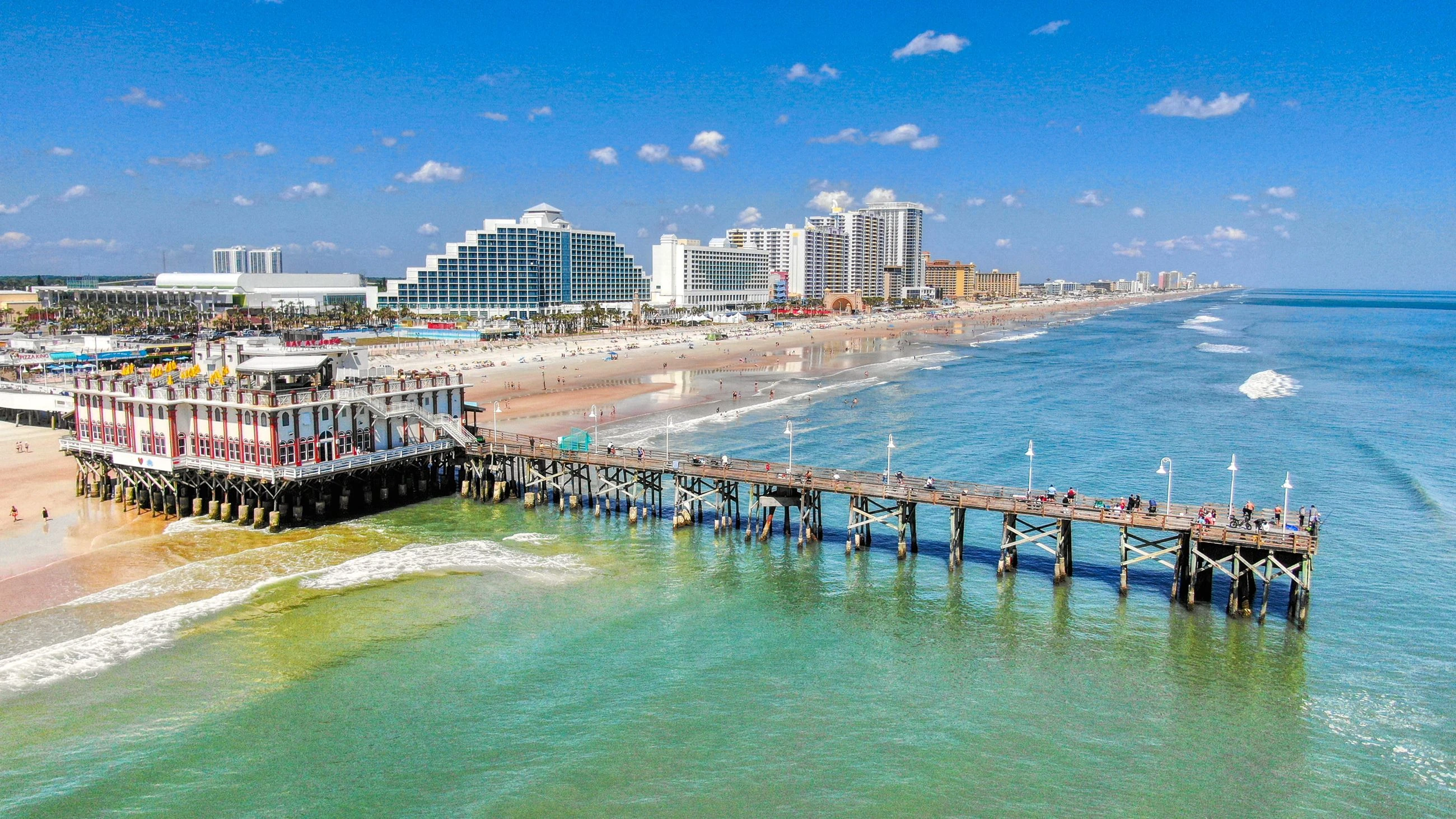
A1A between downtown and Daytona Beach Shores carries a dense run of oceanfront hotels that host conferences, association meetings, and smaller trade shows in their own ballrooms and meeting suites: the Hilton Daytona Beach Oceanfront Resort, Hard Rock Hotel Daytona Beach, Daytona Grande Oceanfront Resort, Renaissance by Marriott Daytona Beach Oceanfront, The Plaza Resort & Spa, Holiday Inn Resort Daytona Beach, Hilton Garden Inn Daytona Beach Oceanfront, and The Daytona, Autograph Collection Hotel.
Resort ballrooms run on hotel logistics rather than convention-center logistics — service elevators instead of drive-in docks, banquet staff sharing the loading area, and stricter noise and hour restrictions during install. A booth or general session build that would be routine at Ocean Center needs a different freight and labor plan in a hotel property, and we scope that difference before the show books.
Peabody Auditorium and cultural venues
Peabody Auditorium is a 2,545-seat theater on the oceanfront that hosts stage productions, award programs, and meeting-format events that still carry vendor booths in the lobby or adjacent space. The Daytona Beach Bandshell and Oceanfront Park Complex handles outdoor programs and festivals that need tent, stage, and vendor-row support rather than a convention floor.
The Museum of Arts & Sciences, further inland on Nova Road, and smaller venues like the Brannon Center round out the market for association meetings, receptions, and product events that don't need convention-center scale but still need professional booth and AV production.
Freight and drayage into the building
Every Daytona Beach show starts with the same freight question: advance to the warehouse or direct to dock. Ocean Center runs a standard advance-freight and material-handling process through the show's general contractor. Resort venues typically need advance freight held at a local warehouse and delivered on a scheduled window, since hotel loading docks don't have the queue capacity a convention center does.
We coordinate the drayage schedule against the actual move-in window assigned to the show, not a generic estimate, and we hold crated freight in local storage between events for clients running repeat programs through the market.
Labor and show-site supervision
Install and dismantle labor runs differently building to building. Ocean Center pulls from the standard convention-labor pool under the venue's jurisdiction rules. Resort properties often allow more flexibility on who can touch the booth, but they add their own restrictions on load-in hours and loading-area access.
A supervisor on site through move-in, show days, and move-out catches the problems that don't show up on a floor plan — a booth that doesn't match the approved footprint, a dock queue running behind schedule, a change order that needs sign-off before crews can keep working.
Graphics, AV, and booth production
Large-format graphics, signage, and booth structures get produced and staged ahead of the show, then installed on the assigned window rather than built from scratch on site. That keeps the install crew's time on the floor focused on assembly and finishing rather than fabrication.
AV and lighting scope varies by venue — a general session at Ocean Center needs a different rig than a breakout room at a beachfront hotel — and we build the production plan against the room the client actually booked, including power distribution and any venue-specific electrical requirements.
Planning timeline for a Daytona Beach show
Booth design and fabrication scope gets locked first, since it drives the freight and labor plan that follows. Advance freight bookings, labor orders, and venue paperwork — certificates of insurance, exhibitor kits, compliance forms — come next, timed to each venue's own deadlines rather than a single citywide cutoff.
Show week itself runs on the move-in window: freight arrives, labor executes the build, supervision covers the show days, and dismantle closes it out with outbound freight scheduled before the venue's load-out deadline.
Repeat programs across the Daytona Beach market
Clients running recurring events across multiple Daytona Beach venues — an annual conference at Ocean Center paired with a smaller regional meeting at a resort property later in the year — benefit from one team holding the booth inventory, the vendor relationships, and the venue-specific knowledge between shows.
That continuity cuts the re-briefing and re-training that comes with switching production vendors each time, and it means storage, refurbishment, and rebuild costs stay predictable from one Daytona Beach event to the next.
Frequently asked questions
What is the largest trade show venue in Daytona Beach?
Ocean Center is the largest venue in the market, with more than 205,000 square feet of flexible indoor and outdoor meeting space near the oceanfront. Most convention-scale trade shows and expos in Daytona Beach run through Ocean Center.
Do hotel ballroom shows need different logistics than Ocean Center shows?
Yes. Resort properties like the Hilton Daytona Beach Oceanfront Resort or the Renaissance by Marriott Daytona Beach Oceanfront run on hotel loading docks and service elevators rather than convention-center dock queues, which changes the freight schedule and often the labor rules.
Can Trade Show Services of Daytona handle a show at Peabody Auditorium or the Bandshell?
Yes. We support stage-format events at Peabody Auditorium and outdoor programs at the Daytona Beach Bandshell and Oceanfront Park Complex with vendor booth, tent, and AV production sized to those venues rather than convention-floor scale.
How far in advance should freight arrive for a Daytona Beach show?
It depends on the venue's advance-freight window, but we typically plan warehouse delivery several days to a week ahead of move-in so crated freight is staged and ready when the assigned dock window opens, especially for resort venues with limited on-site storage.
Does Trade Show Services of Daytona cover the whole Daytona Beach area or just downtown?
We cover the full footprint — downtown, beachside, midtown, Daytona Beach Shores, Holly Hill, and the Speedway and airport district — with venue-specific planning for each area rather than one generic citywide approach.
Can you manage multiple Daytona Beach events for the same client in one year?
Yes, and it's one of the more common engagements we run. Holding the same team and booth inventory across repeat Daytona Beach shows keeps per-event costs down and avoids re-briefing a new vendor each time.