Venue fit
Automotive Trade Show Services
Planning should stay tied to the room and event rules that actually apply.
Operational focus
Industries
The route, labor call, and closeout plan need one operating picture.
Next step
Coordinate early
The practical work starts by locking the venue, footprint, and support scope.
Automotive Trade Show Services planning starts with how buyers in this category evaluate proof, demos, staffing, claims, hospitality, and follow-up conversations.
Daytona Beach events cluster around a small number of venues, and each one has a different personality on the floor.
A venue walk — either in person or via the published floor plan — is the step that reveals constraints no spec sheet shows. Column spacing, real ceiling height at the grid point, and dock access shape what's actually buildable.
Daytona Beach floor operations follow the venue's own manual. Dock timing, utility orders, rigging, and crew calls all come out of that document.
Practically, that means pulling the current exhibitor manual for every show and confirming a handful of items in writing: which tasks the venue's house crews cover, which tasks the show's general contractor covers, and what an exhibitor or their appointed contractor can handle without escalation.
Execution priorities
- Match automotive trade show services to the actual venue and event conditions.
- Lock freight, labor, and utilities into one schedule.
- Keep approvals and closeout items visible to the full team.
- Plan the next show before the current one finishes.
Daytona Beach venues we work
Daytona Beach events cluster around a small number of venues, and each one has a different personality on the floor.
A venue walk — either in person or via the published floor plan — is the step that reveals constraints no spec sheet shows. Column spacing, real ceiling height at the grid point, and dock access shape what's actually buildable.
Operational rules on the Daytona Beach floor
Daytona Beach floor operations follow the venue's own manual. Dock timing, utility orders, rigging, and crew calls all come out of that document.
Practically, that means pulling the current exhibitor manual for every show and confirming a handful of items in writing: which tasks the venue's house crews cover, which tasks the show's general contractor covers, and what an exhibitor or their appointed contractor can handle without escalation.
Event labor, staffing, equipment, and operating rules at Ocean Center should be confirmed against the current Meeting Planner/Event Planning Guide and event-specific paperwork instead of being generalized from past shows.
The main Daytona Beach event areas
DeLand, Downtown DeLand, Orange City, Deltona form the West Volusia and Flagler Expansion cluster.
South Coastal Volusia runs across Port Orange, South Daytona, Ponce Inlet. Strong fit for conference overflow, waterfront off-sites, and activation work that extends south beyond Daytona but still benefits from one Daytona-area project lead and logistics base.
What's included in the project scope
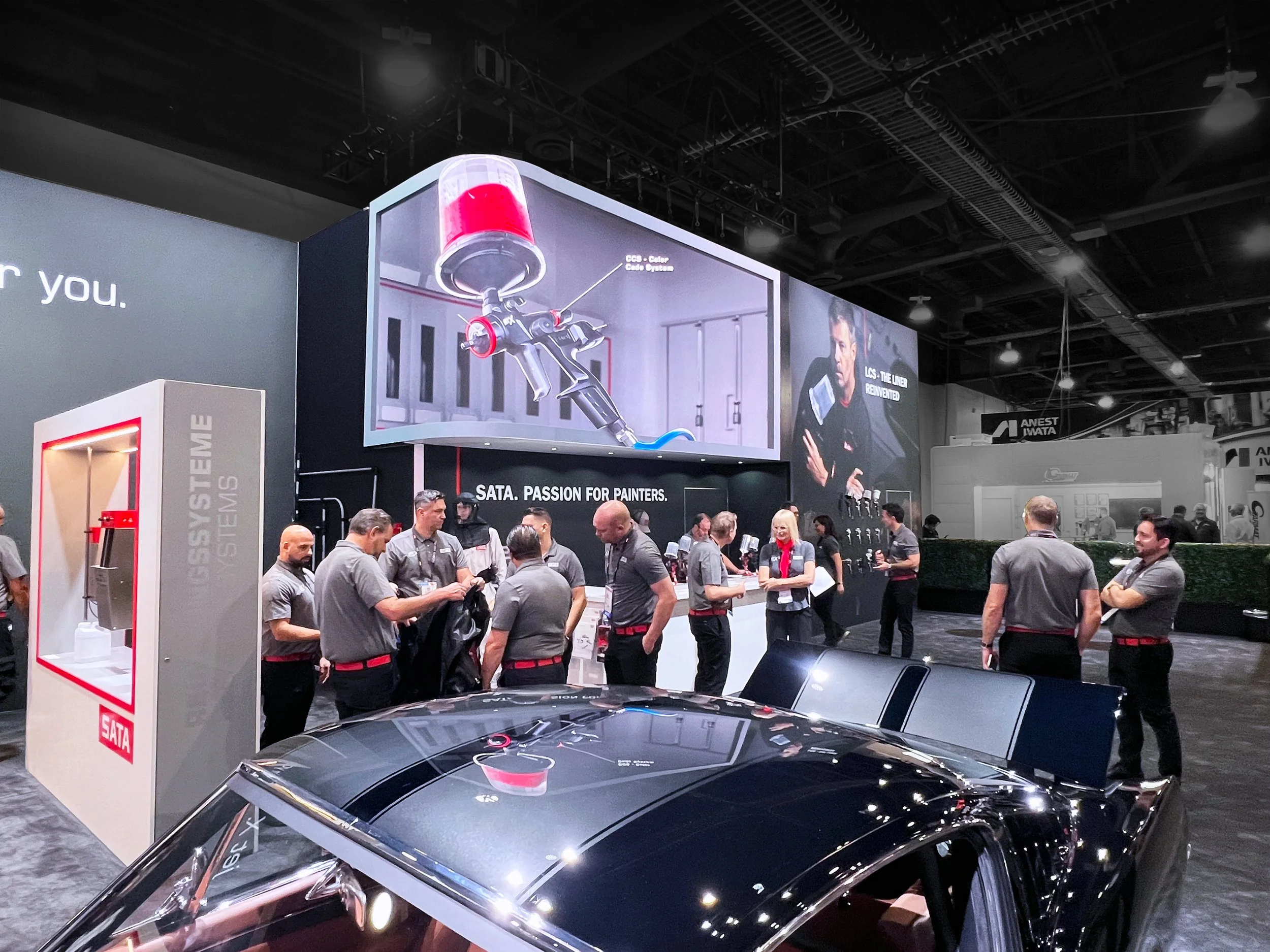
The services projects typically include design work, fabrication or rental sourcing, graphics production, show-service paperwork, freight, install, show-hours coverage, and strike.
Typical line items include booth structure (custom or rental), graphics and print, AV and lighting, show-service orders (power, internet, rigging), labor calls against the venue's rules, freight both ways, on-site supervision, and post-show closeout documentation.
Good execution comes from keeping the team small and the handoffs short. Every extra vendor in the chain adds a communication layer and a place where details get lost.
For programs that repeat, asset management becomes part of the engagement — storage, graphic rotation, refurbishment, and re-crating are planned rather than one-off.
Scope boundary is as important as scope inclusion.
What an engagement actually looks like
Every project starts with a scope conversation: the show, the venue, the booth number, the dates, and the budget frame. Ten minutes of specifics produces a better plan than a week of generalities.
After the brief, the work turns to the building itself.
With venue details locked, production runs.
One named show-site lead runs the install.
Throughout show hours, the on-site lead stays present.
After the show, strike runs against the venue's posted window, and a same-day debrief captures what held and what needs to change before the next date.
What it costs and how fast it moves
Every project has the same cost drivers.
The levers that matter: build path (custom, rental, or hybrid), footprint, venue service fees, graphics, freight, and supervision days. A 10x10 turnkey rental and a 30x50 custom island with a double deck are entirely different projects.
Rental programs run on 8 to 12.
What a successful project looks like
The measure of a good engagement is simple: on-time install, no venue callouts, clean show hours, and a closeout that makes the next event easier to book.
Exhibitors who measure programs seriously track leads, floor-booked meetings, and post-show pipeline. The build and the install are upstream inputs to those KPIs.
The post-show debrief is where the numbers get connected back to the physical booth. Which demo station drew traffic, which meeting area closed more conversations, which graphic zone attracted dwell time — that feedback shapes the next build rather than getting lost.
How we're built to run your project
Trade Show Services of Daytona is Daytona Beach's local trade show team, with in-house design, fabrication, graphics, and show-site crews. One shop, one point of contact, one accountable lead on every project.
Working with a Daytona Beach-based shop matters most when something goes wrong on-site. Solutions live within driving distance instead of on another coast.
Over a multi-show calendar, the compound value of a single team shows up in fewer surprises. The second install is faster than the first, the third is faster than the second, and by the fourth the project runs on memory and documentation rather than first-principles planning.
The Daytona Beach event landscape
Daytona Beach is a working trade show market.
Automotive Trade Show Services works when the exhibit plan connects message hierarchy, product handling, lead capture, and the pace of the room.
The meeting-hotels section highlights 200 properties, 12,000 rooms, 24 meeting hotels, and more than 180,000 square feet of hotel meeting space, which sets the practical ceiling for a booth program working the market.
Ocean Center features more than 205,000 square feet of flexible indoor and outdoor meeting space and sits roughly 400 feet from the Atlantic Ocean — a useful reference point when sizing a project.
Automotive Trade Show Services planning questions
Do you work at Ocean Center?
Yes.
How does labor work in Daytona Beach?
It runs venue by venue.
How much lead time is ideal?
Custom builds run best with 16 to 20 weeks of lead time. Rentals take 8 to 12 weeks.
What information kicks off a project?
The show, the venue, the booth number, the dates, and a target budget range. From those, an initial scope and a realistic cost come back within a few days.
Who runs the booth on-site?
One named show-site lead runs the install, the show hours, and the strike. That person carries the floor plan and the punch list from crates to doors and reports up once a day.
Can the booth travel to the next city on our calendar?
Same structure, swappable graphics, standard crates.
What happens if something breaks during show hours?
The on-site lead handles it.