
Venue fit
Orange City, FL
Planning should stay tied to the room and event rules that actually apply.
Operational focus
Locations
The route, labor call, and closeout plan need one operating picture.
Next step
Coordinate early
The practical work starts by locking the venue, footprint, and support scope.
Orange City exhibitors and event hosts are planning inland, away from the oceanfront hotel corridor that most Daytona Beach trade show guides assume. The town sits along US-17/92 at the I-4 interchange, close to Blue Spring State Park and just south of DeLand, and any production plan built for it has to start from that geography rather than from the beachside venue map.
The town itself has no exhibit hall or ballroom of convention scale. What it has is a compact, well-connected position on I-4 that makes it a practical staging point for crews and trucks moving between the DeLand courthouse district, the west Volusia residential belt, and the oceanfront venues thirty to forty minutes east. Founded by New England settlers in the 1870s and still laid out on that same small-town grid, Orange City functions as a bedroom and gateway community rather than a show floor.
For Trade Show Services of Daytona, that means Orange City projects are run as satellite work off the main Daytona Beach book: labor, freight, and AV crews based in the metro core travel out for install and dismantle, warehouse holds happen closer to the venue actually booked, and the Orange City address mainly defines where exhibitor teams, sponsors, or regional offices are staging from before a show.
Execution priorities
- Route freight and crew from the Daytona core to the correct venue, not to Orange City itself.
- Use the I-4 / US-17-92 interchange as the staging and rally point for west Volusia work.
- Coordinate hotel holds in DeLand or the oceanfront corridor depending on show dates.
- Keep labor calls aligned with the venue's house rules, wherever the show actually lands.
- Plan closeout and return freight around Orange City's inland distance from the coast.
Why Orange City isn't a venue address
Orange City has no convention center, hotel ballroom, or arena built for trade show floors. It is a residential and commercial crossroads at the I-4 and US-17/92 interchange, valuable to event planning mainly because of what surrounds it: Blue Spring State Park a few miles west, DeLand's courthouse square just north, and a straight shot down I-4 to the Speedway district and the oceanfront hotel row.
When a client's mailing address or regional office is in Orange City, the actual show almost always sits somewhere else — the Ocean Center, one of the oceanfront resort ballrooms, or occasionally a DeLand meeting space. The planning conversation starts by confirming that distinction before anything else gets scheduled.
Freight routing from the I-4 corridor
Trucks staging out of Orange City run east on I-4 to reach the Speedway/airport district or continue on toward the beachside venues, a drive that typically runs thirty to forty-five minutes depending on where the dock or loading zone actually is. That drive time gets built into the freight schedule as a fixed buffer, not an afterthought, because show-week traffic on I-4 near the Speedway can add real delay during event weeks.
For advance freight, the warehouse hold is almost always set up nearer the venue itself rather than in Orange City, since drayage from a west Volusia hold adds an unnecessary leg. Orange City's role in the freight plan is usually as a crew and vehicle staging point, not a cargo one.
Hotel blocks and crew lodging
Orange City itself has limited hotel inventory, so overnight blocks for install crews working west Volusia shows typically land in DeLand or, for oceanfront shows, in the resort corridor near the venue. Teams commuting from Orange City for a beachside show should plan for the I-4 drive both directions across a multi-day install-show-dismantle cycle.
For a west Volusia-based show — a smaller conference or community event using a DeLand facility — Orange City lodging can work as an overflow option when the primary block near the venue sells out, given the short drive up US-17/92.
Labor coordination for west Volusia clients
Labor rules follow the venue, not the client's Orange City address. If the show is at the Ocean Center or an oceanfront resort, the exhibitor manual and general contractor's labor jurisdiction rules for that building apply in full, regardless of where the exhibiting company's local office sits.
What does change for an Orange City-based client is the pre-show planning cadence: site visits, vendor meetings, and material drop-offs can often happen locally along the I-4 corridor before the crew and freight commit to the longer haul to the coast.
Blue Spring and the town's working identity
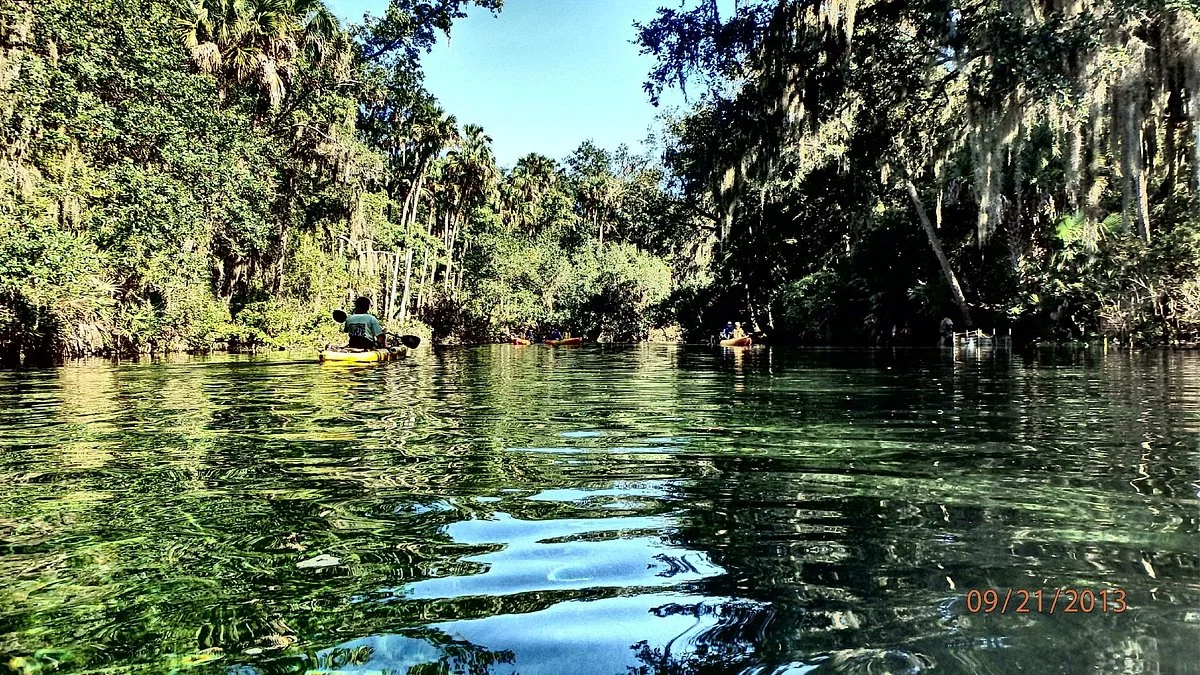
Blue Spring State Park, a few minutes from town, is Orange City's best-known landmark — a first-magnitude spring and winter manatee refuge that draws steady visitor traffic in cooler months. It shapes the area's character as a nature-and-residential community rather than an event destination, and it is a useful local reference point for out-of-town crews trying to orient themselves off I-4.
That identity matters for scheduling: winter show weeks that overlap with peak manatee season can mean heavier weekend traffic on US-17/92 near the spring, which is worth factoring into crew arrival windows if lodging is set up locally.
AV, graphics, and booth build logistics
Booth graphics and AV equipment bound for an oceanfront or Speedway-district show rarely stage out of Orange City directly; production and printing happen at the shop serving the whole Daytona Beach book, with delivery timed to the venue's dock schedule. An Orange City client's involvement is mostly in the approval and proofing stage, which can happen remotely or at a local meeting point along I-4.
For install and dismantle, crews based in or routed through Orange City are scheduled the same as any other Daytona Beach crew assignment — the difference is purely in where they start their drive, not in how the work is scoped or supervised.
Show-week timeline for Orange City-based teams
A typical show-week sequence for an Orange City client starts with a final walkthrough call two to three weeks out, confirming venue, dock access, and labor jurisdiction. Material and crew staging then shifts toward the venue itself in the days immediately before move-in, rather than staying local to Orange City through the whole cycle.
During the show, an Orange City-based exhibitor team commutes to the venue daily; after closeout, freight returns either to the west Volusia area or directly onward depending on the next scheduled show, which is confirmed before dismantle begins so nothing sits idle waiting on a decision.
Coordinating with the wider west Volusia footprint
Orange City sits inside a cluster of small west Volusia communities — DeLand to the north, Deltona to the south, DeBary to the southeast — that Trade Show Services of Daytona treats as one planning zone rather than separate service areas. A crew or freight run staged through Orange City can often cover a stop in one of these neighboring towns on the same trip.
That regional grouping keeps travel efficient for clients with offices or warehouse space scattered across west Volusia, and it means an Orange City point of contact is rarely the only stop on a given day's route.
Working with Trade Show Services of Daytona from Orange City
The first step for an Orange City client is the same as anywhere else in the service area: confirm the venue, the show dates, and the footprint, then build the freight and labor plan around that specific building rather than around the office address. Orange City's inland position simply gets factored in as a fixed drive-time variable.
From there, planning, freight coordination, labor calls, and AV or graphics production run through the same Daytona Beach-based teams used for every other location in the service area, with the Orange City relationship staying mainly at the point of contact and staging level.
Frequently asked questions
Is there a trade show venue in Orange City itself?
No. Orange City has no convention hall or ballroom built for exhibit floors. Shows tied to an Orange City client are almost always held at the Ocean Center, an oceanfront resort, or occasionally a DeLand meeting space, with Orange City functioning as a staging or office location rather than the event site.
How far is Orange City from the Ocean Center?
The drive is roughly thirty to forty minutes under normal traffic, running east on I-4 and then through the Speedway/airport district toward the beachside venue corridor. That window gets padded further during show-week congestion near the Speedway.
Where should crews staging out of Orange City stay overnight?
For oceanfront shows, lodging near the venue is more practical than commuting daily from Orange City. For west Volusia events, DeLand or Orange City itself can work as a local base, given the short drive along US-17/92.
Does Orange City's distance from the coast affect freight cost?
It can add a modest transportation leg if a warehouse hold or shop run is staged in Orange City rather than closer to the venue. In most cases the advance freight hold is set up near the venue itself specifically to avoid that extra leg.
Can Orange City work as a staging point for multiple west Volusia stops?
Yes. Orange City's position on I-4 near DeLand, Deltona, and DeBary makes it a workable hub for a single crew or vehicle run covering more than one west Volusia client in the same trip.
Does Blue Spring's manatee season affect show scheduling?
Winter weekends near Blue Spring State Park see heavier local traffic on US-17/92 as visitors come for the manatee season. It rarely affects show timing directly but is worth building into crew arrival windows if lodging is local.