
Venue fit
10x10 Trade Show Booths
Planning should stay tied to the room and event rules that actually apply.
Operational focus
Booth Types
The route, labor call, and closeout plan need one operating picture.
Next step
Coordinate early
The practical work starts by locking the venue, footprint, and support scope.
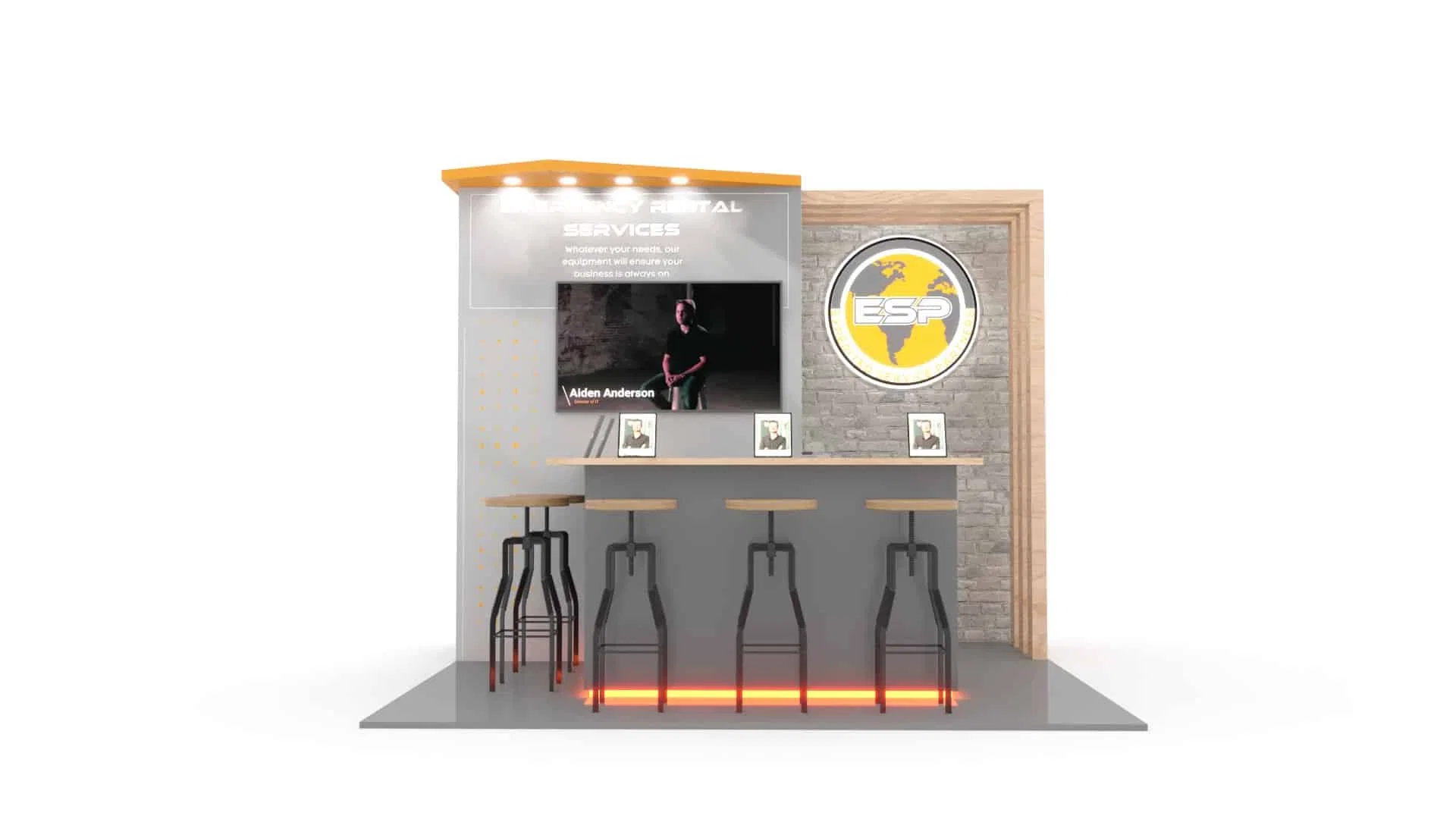
A 10x10 trade show booth gives you roughly 100 square feet of inline space, usually one open aisle side, and an eight-foot back wall, so every design decision has to earn its place.
In Daytona Beach that footprint shows up most on the 93,028-square-foot Ocean Center exhibit hall, where rows of 10x10 inlines fill the aisles around the larger islands and peninsulas.
The constraint with a 10x10 is height and reach: an eight-foot back wall and a single sightline mean the graphic, the lighting, and the product placement carry the whole booth.
Because the structure is light, a 10x10 ships as a portable or modular kit, which keeps freight off the dock schedule and lets one person manage install inside a standard Ocean Center labor call.
We build 10x10s that read clean from the aisle, set up inside the published install window, and travel cleanly to the next show on your calendar.
Execution priorities
- Design the back wall and corner sightlines for single-aisle traffic.
- Keep the kit light enough for portable freight and a one-person install.
- Order Ocean Center power and lead retrieval against the right booth number early.
- Plan graphic swaps so the same frame works the next show.
What a 10x10 footprint gives you in Daytona Beach
A 10x10 is a 100-square-foot inline space, typically open on one aisle side with eight-foot side rails and an eight-foot back wall. It is the default unit of the Ocean Center exhibit hall and most hotel ballroom expos in the market.
The footprint forces discipline. There is room for one strong message, a demo point or two, and a place to talk, and not much more, so the design has to decide what the booth is for before anything gets built.
Corner booths change the math. An end-cap 10x10 with two open aisle sides reads almost like a small island, and on the Ocean Center floor those corners are worth asking the organizer about early.
The Ocean Center exhibit hall and 10x10 rows
Ocean Center anchors Daytona Beach conventions with more than 205,000 square feet of flexible space and a 93,028-square-foot exhibit hall sitting roughly 400 feet from the Atlantic. Most of that hall is laid out in 10x10 increments.
The exhibitor section highlights multiple loading docks with self-leveling bays and a roster of pre-approved professional decorators and contractors, which keeps a 10x10 load-in fast when the kit is crated and labeled correctly.
Because the hall is a true convention floor rather than a hotel ballroom, the house decorator drape, the aisle carpet, and the booth package all come through show-service orders that have to be placed against your specific booth number.
Hotel ballroom 10x10 programs near the boardwalk
Not every Daytona Beach show lands at the Ocean Center. Beachfront properties like the Hilton Daytona Beach Oceanfront Resort and The Plaza Resort & Spa host smaller expos where 10x10 inlines fill a single ballroom.
Ballroom shows trade the convention dock for a service elevator and a back-of-house corridor, so a 10x10 that breaks down into hand-carried cases moves through those buildings far more easily than a crated structure.
The Hilton's oceanfront meeting space, including the 5,250-square-foot North Tower Terrace, also pairs a ballroom expo with a terrace reception, and a portable 10x10 can be reset for both without a second freight run.
Graphics and lighting on a small booth
On a 10x10 the back wall is the booth. A tension-fabric SEG graphic that fills the full eight-by-eight reads cleaner from the aisle than a banner stand fighting for attention against a draped pipe.
Lighting earns its keep here. Two or three arm lights or an integrated LED wash lift a fabric wall off the convention-hall ambient and pull aisle traffic that would otherwise walk past.
Counter and shelf choices come next. A single branded counter with locking storage handles literature, giveaways, and the things you do not want on the floor, and it doubles as the conversation point.
Freight, labor, and install for a 10x10
A 10x10 portable or modular kit usually travels in one or two wheeled cases or a single small crate, which keeps it off the heavy-freight schedule and inside material-handling minimums.
Install on a clean 10x10 is often a one-person, one-to-two-hour job. The labor question is mostly about the venue rules: the Ocean Center routes labor through pre-approved contractors, while hotel shows follow each property's house rules.
Strike runs the same way in reverse. The kit folds back into its cases, the graphics roll, and the booth is on its way to the next city before the dock clears for the next occupant.
Scope on a 10x10 project
A typical 10x10 engagement covers the back-wall structure, the printed graphics, lighting, a counter or kiosk, the show-service orders through the venue, and the freight in and out.
Show-floor coverage is part of the engagement, not a premium add-on. Even a small booth benefits from one set of hands during exhibitor move-in to confirm power, level the wall, and stage the literature.
Multi-show programs add storage and graphic swaps, so the same 10x10 frame carries a new message from a Daytona Beach expo to the next stop without rebuilding the hardware.
Budget and timeline for a 10x10
A 10x10 is the most cost-predictable footprint we quote. The variables are the structure type, the graphic count, the lighting package, and whether you rent or own the hardware.
Rental 10x10s run comfortably on six to eight weeks of lead time. A purchased custom-modular 10x10 wants closer to eight to twelve so the graphics and any branded counter clear production.
Material handling and any Ocean Center show-service orders are the line items exhibitors forget, so we put venue charges in the quote rather than letting them surface as drayage surprises later.
Common 10x10 mistakes on the Daytona floor
The most frequent miss is too much copy. A 10x10 read from ten feet away in a busy aisle has a few seconds to land one idea, and a wall full of paragraphs loses every time.
The second is ignoring the corner. Exhibitors take the first 10x10 offered without asking whether an end-cap with two open sides is available, and on a convention floor that second sightline is real traffic.
The third is under-ordering power. A demo screen, lighting, and a device charger on one standard outlet trips the booth mid-morning, so the electrical order has to match the actual draw.
Why a local Daytona Beach team helps on a 10x10
Trade Show Services of Daytona builds, stores, and services 10x10 kits in-house, so a graphic that needs a reprint the morning of move-in is a same-day fix rather than a shipping delay.
Knowing the Ocean Center exhibitor workflow and the beachfront hotel back-of-house means the show-service orders, the dock timing, and the labor calls are set correctly the first time.
Exhibitors who run the same 10x10 across multiple Daytona dates pay less per show over time, because the structure is already built and the team already knows the buildings.
10x10 trade show booth questions
How big is a 10x10 booth, really?
A 10x10 is about 100 square feet of inline space, usually open on one aisle side, with eight-foot side rails and an eight-foot back wall. Useful display height is the eight-foot back, so the back wall does most of the work.
Will a 10x10 work at the Ocean Center exhibit hall?
Yes. The 93,028-square-foot Ocean Center exhibit hall is laid out largely in 10x10 increments, and inline 10x10s fill the aisles around the larger islands. The booth package and power come through Ocean Center show-service orders placed against your booth number.
Should I get a corner 10x10?
If it is available, usually yes. An end-cap 10x10 with two open aisle sides reads almost like a small island and draws traffic from a second direction. We ask the organizer about corner inventory early because those spots go fast.
How much lead time does a 10x10 need?
A rental 10x10 runs well on six to eight weeks. A purchased custom-modular 10x10 with branded graphics and a counter wants eight to twelve so production clears. Rush builds inside four weeks are possible but narrow the options.
Can one person set up a 10x10?
On a clean portable or modular 10x10, usually yes, in one to two hours. The constraint is the venue: the Ocean Center routes labor through pre-approved contractors, while beachfront hotel shows follow each property's house rules.
Can I reuse the same 10x10 at other shows?
Yes. We design 10x10s for modular reuse with swappable graphics and standard cases, so the same frame carries a new message from a Daytona Beach expo to the next city on your calendar.
What does a 10x10 program usually include?
Back-wall structure, printed graphics, lighting, a counter or kiosk, the venue show-service orders, freight in and out, and on-floor support during move-in. Multi-show programs add storage and graphic swaps.